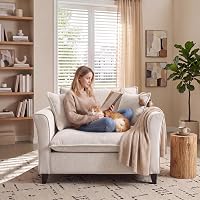
What Is a Chair and a Half?
A chair and a half is an extra-wide chair meant mainly for one person, with room to shift positions or curl up. It usually takes more floor space than an armchair and less than a loveseat.
On this page (9 sections)
- What is a chair and a half?
- How big is a chair and a half?
- Is a chair and a half the same as a loveseat?
- Who should choose a chair and a half?
- Which of these chairs suits your routine?
- What should you measure before buying?
- How should you set up and care for the chair?
- What mistakes should you avoid?
- Which chair and a half should you choose?
A chair and a half is an extra-wide chair meant mainly for one person, with room to shift positions, curl up, or sit with a book beside you. It usually takes more floor space than a standard armchair and less than a loveseat.
The name doesn't mean it seats exactly 1.5 people or follows a fixed size standard. Choose by usable seat space and how you sit, then check whether the full chair and any ottoman fit your room.
What is a chair and a half?
A chair and a half is a roomy single chair, often chosen as a reading seat or a place to lounge. Its main benefit is extra space for one person rather than a dependable second seat.
The extra room may come from a wider cushion, a deeper seat, or both. Broad arms can also make the frame look large without adding much space for your body.
It can serve as the main chair in a reading corner or sit beside a sofa as separate seating. For the wider category, see what an accent chair is.
How big is a chair and a half?
There is no standard width or depth for a chair and a half. Measure overall size to judge room fit, then use the seat dimensions to judge sitting space.
Overall width includes the arms, while usable seat width is the space between them. Seat depth runs from the front edge to the back cushion, so a large footprint doesn't always mean a deep sitting area.
Compare those measurements with a chair you already find comfortable. Notice whether you want more room beside your hips, more space to tuck up your legs, or simply wider arms.
Use the accent chair dimensions guide to separate seat measurements from the chair's full footprint.
Is a chair and a half the same as a loveseat?
No. A chair and a half generally provides one generous seat, while a loveseat is intended to seat two people.
A wide cushion may accommodate brief sharing, but that doesn't make it a useful replacement for two separate seats. Both people need enough room to sit without leaning over an arm or crowding each other.
Choose a loveseat if two adults will sit there regularly. Our chair and a half vs loveseat comparison explains which format makes better use of a shared room.
Who should choose a chair and a half?
Choose one if extra personal space matters more than adding another seat. It suits a reader who changes positions, a solo TV viewer, or someone who likes to tuck their feet beside them.
A wide seat and a deep seat solve different needs. Extra width gives you sideways room; extra depth lets you sit farther back, but may leave shorter users' feet off the floor.
For reading, check whether you can rest your elbows without raising your shoulders. A chair that encourages lounging may still need a small back cushion when you want to sit upright.
Our guide to choosing an oversized reading chair helps match the seat shape to your usual reading position.
Who should skip a chair and a half?
Skip a chair and a half if you need two regular seats or a clear path through a tight room. A smaller armchair can be the better choice when broad arms and a deep frame would crowd nearby furniture.
Also be cautious with a deep seat if you prefer feet-down sitting. For more help judging shape and support, read whether accent chairs are comfortable.
Which of these chairs suits your routine?
The two LUXSeatful sets suit foot-up lounging, while the Howjoe is worth considering for a separate reading seat. Check the usable sitting area before choosing, since their names alone don't tell you how roomy they feel.
Chenille Chair and Ottoman Set: for a dedicated lounge corner
The LUXSeatful Chenille Chair and Ottoman Set suits someone who wants a separate footrest and space to curl up. It combines chenille upholstery, a deep seat, pillows, and a solid wood frame.
Its seat uses 32D foam and pocket springs. That construction is useful to compare with all-foam options, though it doesn't tell you which feel you'll prefer.
Skip this set if the ottoman would spend most of its time blocking a path. A chair-only option makes more sense when you rarely sit with your feet up.
LUXSeatful gives conflicting seat-width and overall-width figures for this set. Confirm the usable seat width and separate chair and ottoman measurements before ordering; the advertised size isn't reliable enough for a tight fit.
42-Inch Corduroy Chair and a Half: for traditional room styles
The second LUXSeatful set suits someone who wants rolled arms and nailhead trim alongside an ottoman. Its wooden frame and high-resilience foam cushions make it another option for a reading or TV corner.
LUXSeatful specifies a 350 lb capacity. Use that limit as a load boundary, not as evidence that the chair provides enough space for two adults.
Skip it if you want straight arms or need certainty about the fabric before buying. LUXSeatful describes the upholstery as both corduroy and chenille, so the fabric type needs clarification if texture is a deciding factor.
The cover details also conflict. Don't choose this model on the assumption that its seat cover comes off for washing.
Oversized Reading Armchair, Beige: for a separate reading seat
The Howjoe suits someone who wants a chair without an included ottoman. Its curved arms and arched back offer a different shape from the two lounge sets.
The seat measures 20.5 in wide by 20.5 in deep, with chenille upholstery, high-density foam, and springs. Its specified weight capacity is 400 lb.
Skip it if your main goal is a very wide cushion for sitting sideways. Measure the space you need for that position rather than assuming the word “oversized” guarantees it.
Howjoe's overall dimensions vary across its details, so resolve the footprint before choosing it for a narrow spot. For the broader naming issue, see chair and a half vs oversized chair.
What should you measure before buying?
Measure the room footprint, sitting area, and delivery route before choosing a chair. A seat can fit against a wall yet still block a drawer or fail to turn through a hallway.
Mark the proposed footprint on the floor with removable tape. Add a separate outline for an ottoman, then walk through the room and use nearby furniture as usual.
Check these points:
- Doors and drawers: Allow their full opening range.
- Walking routes: Keep the path clear with the ottoman in use.
- Delivery turns: Measure hallways, stair landings, and room entrances.
- Packaging: Compare box dimensions with the route, not just assembled size.
- Seat access: Leave space to approach the chair and stand up comfortably.
Don't assume removable legs or arms will solve a delivery problem unless that construction is confirmed. Compare other shapes in our oversized accent chair guide if the planned footprint feels crowded.
How should you set up and care for the chair?
Place the chair where you can sit, stand, and reach what you need without stretching. Keep a reading light and side table close enough to use while your back rests against the cushion.
With an ottoman, leave a gap that lets you enter and exit the seat easily. Move it aside when needed rather than stepping over it.
Check all parts before assembly and follow the chair's instructions. After setup, confirm that the legs sit evenly and the chair feels stable before regular use.
For routine care, follow the upholstery care label and vacuum gently with a suitable attachment. Blot spills promptly instead of rubbing them into the fabric.
A removable cover isn't automatically machine washable. Avoid soaking cushions, and try any permitted cleaner on a hidden area first.
What mistakes should you avoid?
The most common mistake is buying by the category name instead of the sitting area. A large frame may use plenty of floor space while offering less cushion width than you expected.
Don't choose a deep seat only because it looks inviting in a photo. Compare its depth with your leg length and the position you use most often.
Avoid treating an ottoman as free extra seating. Only use it as a seat when its intended use and capacity support that purpose.
Finally, don't assume plush means supportive for every task. Reading, conversation, and laptop use can call for different positions; our accent chair buying guide helps place the chair within your wider room plan.
Which chair and a half should you choose?
Use this decision rule: choose the sitting position first, then the footprint and style. Understanding what a chair and a half is helps you avoid paying for extra bulk when you need extra usable room.
Choose the Chenille Chair and Ottoman Set for a dedicated foot-up corner once its dimensions are confirmed. Choose the 42-Inch Corduroy Chair and a Half if rolled arms and nailhead trim suit your room, after clarifying its fabric and cover care.
Consider the Howjoe if its measured seat suits you and you don't need an included footrest. If two people need everyday seating, use our chair and a half vs loveseat comparison to choose the right format.
Frequently asked questions
What size is a chair and a half?
A chair and a half has no standard size; it describes a roomy single chair, so compare usable seat width, seat depth, and overall dimensions separately. Broad arms can take up much of the width, and an included ottoman needs its own floor space.
Can two people sit in a chair and a half?
A chair and a half is usually intended as a roomy seat for one person; two people might fit briefly, but width alone doesn't guarantee safe shared use. Check the intended seating use and total weight limit, and choose a loveseat when two adults need regular seats.
Is a chair and a half the same as an oversized chair?
The terms overlap, but neither guarantees a certain seat size; a chair and a half usually suggests extra width for one person, while an oversized chair may have a large frame around a smaller seat. Compare the space between the arms and the usable depth.
Does a chair and a half need an ottoman?
No, a chair and a half works without an ottoman; a footrest makes sense if you like to stretch your legs while reading or watching TV. Skip it if you prefer feet-down sitting or if the extra piece would crowd a doorway or walking route.