Chair and a Half vs Oversized Chair: Which Is Better? (October 2026)
In a chair and a half vs oversized chair comparison, the names overlap: both can describe a roomy single seat. Choose by usable seat width, depth and floor space, including any ottoman.
On this page (13 sections)
- Chair and a half vs oversized chair: what is the difference?
- Which measurements tell you how roomy a chair feels?
- Which style suits your reading position?
- Who should choose the Howjoe standalone armchair?
- Who should choose the LUXSeatful chair-and-ottoman set?
- How do you plan the chair's footprint and delivery route?
- Which setup works better in a small living room?
- How should you set up the chair for daily use?
- How do you care for a chenille reading chair?
- What mistakes should you avoid when buying either chair?
- Which products fit these two needs?
- FAQ
- Chair and a half vs oversized chair: which should you choose?
In a chair and a half vs oversized chair comparison, the names overlap: both can describe a roomy single seat. The better choice depends on the space between the arms, the seat depth and how you want to rest your legs.
A broad exterior can hide a modest sitting area. A separate ottoman adds leg support, but it also changes how much of the room your seating takes up.
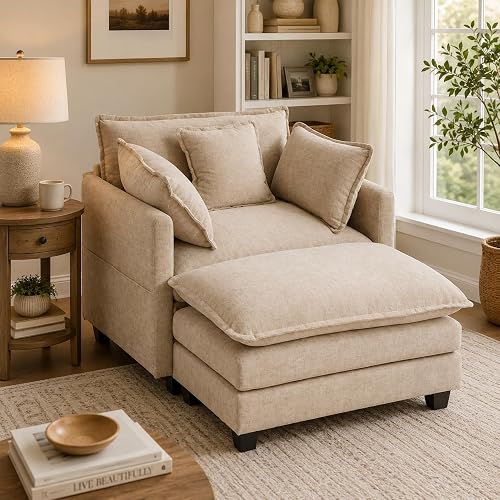
The 2 examples here show that difference: Howjoe's standalone armchair has a defined seat, while LUXSeatful's chair-and-ottoman set provides a separate footrest.

Chair and a half vs oversized chair: what is the difference?
A chair and a half usually means a wider single seat, while oversized chair is a broader size label. Neither name guarantees particular dimensions, shared seating or enough space to stretch out.
An oversized design might get its bulk from thick arms, a deep cushion or a wide back. Only some of those features increase the space available for your body.
An ottoman is a separate choice, too. Either style can work with a footrest, so don't assume a chair and a half includes one or an oversized chair needs one.
For more on the name, see what a chair and a half means. If your real choice is between one lounge seat and shared seating, start with our chair and a half vs loveseat guide.
Which measurements tell you how roomy a chair feels?
Usable seat width and depth tell you more than overall width. Measure a chair you already find comfortable, then use those numbers as your starting point.
Seat width runs between the arms where you sit. Seat depth runs from the front edge to the back cushion, rather than to the rear of the frame.
Howjoe's armchair has a 20.5 x 20.5 in seat within an exterior measuring 38.58 W x 33.07 D x 34.25 H in. That makes it a useful example of why a wide chair isn't necessarily a wide-open lounging surface.
LUXSeatful describes a 41 in seat width but also gives a smaller 40.2 in overall width. Confirm the usable width, depth and separate piece dimensions before ordering because those figures conflict.
Also check seat height when comparing options. Your feet should reach their intended support without the front cushion pressing uncomfortably behind your knees.
Is a chair and a half or oversized chair better for sharing?
Neither label guarantees room for 2 adults. A weight limit describes load support, not the space each person needs between the arms.
For regular shared seating, compare the difference between a chair and a half and a loveseat. A dedicated second seat is more useful than squeezing together whenever someone joins you.
Which style suits your reading position?
Choose the seat around how you read most often. Upright reading, sitting cross-legged and stretching your legs forward each need a different arrangement.
For upright reading, look for a depth that lets you reach the back cushion while keeping your feet supported. Arms should let your shoulders relax when you hold a book, rather than forcing your elbows upward.
For cross-legged reading, usable width matters alongside depth. Allow room for your knees without pressing them against the arms, and account for any pillow that takes up seat space.
For feet-up reading, a separate ottoman can be more useful than extra seat depth. You can support your legs while keeping your back closer to the chair's backrest.
Our guide to choosing an oversized reading chair explains how to match the seat to your posture. If comfort is your main concern, read what makes accent chairs comfortable before choosing by appearance.
Who should choose the Howjoe standalone armchair?
The Howjoe armchair suits upright readers who want one fixed piece beside a lamp or table. Its defined seat makes it easier to compare with a chair you already use comfortably.
The chair has curved arms, an arched back and chenille upholstery. High-density foam fills the back and seat, with springs in the seat cushion and a wood-and-iron frame underneath.
Choose it when your feet usually stay on the floor and you don't want to arrange a separate footrest. Its shape also suits a reading corner that needs a clear boundary between the chair and nearby furniture.
Skip it if your main goal is a broad surface for sitting cross-legged or curling up sideways. Check your actual knee and hip space rather than assuming the oversized name provides enough room.
Its 400 lb capacity is another fit check, alongside seat space. A chair must meet both your support needs and your preferred sitting position.
Who should choose the LUXSeatful chair-and-ottoman set?
The LUXSeatful set suits readers who regularly put their feet up and have room for a separate footrest. The included pillows give you another way to adjust your sitting position.
It combines chenille upholstery, a wood frame, tapered legs, 32D foam and pocket spring support. Those construction details don't guarantee an exact firmness, so choose the layout first rather than predicting cushion feel from foam terminology.
The ottoman is intended for use as a footrest, extra seat or lounging extension. Its separate weight capacity isn't established by the chair's 700 lb maximum weight recommendation.
Skip this set if the footrest would block your main walking route or if you need confirmed seat measurements before committing. The supplied 40.2 W x 56.7 D x 32.3 H in dimensions don't guarantee each piece's footprint.
A movable ottoman is useful only if moving it solves a real layout need. If you have nowhere to put it aside, plan for it to occupy floor space every day.
How do you plan the chair's footprint and delivery route?
Mark the full seating arrangement on the floor before buying. Include the space you need to approach the chair, stand up and reach nearby furniture.
Start with the chair's outer width and depth. For an ottoman setup, add a second outline in the position where your legs will rest, including any gap between the pieces.
Walk through the taped layout while carrying a laundry basket or another everyday item. Check that an open door, drawer or cabinet won't collide with the chair or force you around the footrest.
Place a temporary object where the side table will go. You should be able to reach a book or drink without making the table part of the walking route.
Then measure entry doors, stair turns and hallways separately. Ask for packaged dimensions when the delivery route is tight, since assembled measurements alone don't settle access.
Our guide to standard accent chair dimensions helps with planning. If the taped outline crowds the room, compare accent chairs for small spaces before trying to force a larger chair into it.
Which setup works better in a small living room?
A standalone chair is easier to arrange when floor depth is limited. A chair-and-ottoman set works when you have a dedicated lounging area outside the main walking route.
Look beyond empty floor space beside the sofa. A chair can fit there yet make it difficult to reach a window, open storage or turn toward someone sitting nearby.
In a room used for conversation, angle the seat toward the other furniture rather than placing it wherever the wall allows. That may require more space than a square outline against the wall suggests.
Avoid assuming that both examples are small-room choices because they seat one person. For a wider look at placement, fabrics and chair styles, use our complete accent chair buying guide.
How should you set up the chair for daily use?
Set the chair where your reading light, table and foot support work together. A larger seat won't help if you must lean forward to see the page or twist to reach a drink.
During assembly, account for all parts before tightening the hardware. Follow the supplied sequence and place the chair on an even surface before checking it for movement.
Howjoe packs its components in one box and includes assembly instructions. Check the package contents before discarding packing materials so a missing piece doesn't interrupt setup.
Position a reading lamp so your body doesn't cast a shadow over the book. Keep cords outside the walking route and away from chair legs.
For an ottoman, start with a position that supports your legs without making you slide forward. Adjust the gap until you can use the backrest and get up without stepping awkwardly around the footrest.
How do you care for a chenille reading chair?
Follow the care instructions for the exact upholstery before using water or cleaner. Both chairs use chenille, but that fabric name doesn't guarantee a cleaning method or stain resistance.
If the care directions allow it, remove loose dust and crumbs with a soft upholstery attachment. Avoid dragging a rough tool across the textured surface.
Blot spills promptly with a clean cloth rather than rubbing them into the fabric. Use a cleaning solution only when the care directions permit it, and check it first in a hidden spot.
A removable cushion or backrest doesn't automatically have a washable cover. Check the instructions before unzipping anything or putting a cover in a machine.
Keep pet claws and sharp objects away from fabric loops and seams. Use furniture pads suitable for your flooring, and lift the chair rather than dragging it when you rearrange the room.
Our guide to cleaning a boucle chair covers a different fabric. Don't transfer its cleaning method to chenille without checking your chair's own care directions.
What mistakes should you avoid when buying either chair?
Don't use the size label as a substitute for measurements. Most poor matches start with confusing exterior bulk, usable space and the space needed around the chair.
- Choosing by overall width alone: thick arms can take up room without giving you more space to sit.
- Buying for an occasional posture: choose for the way you read or relax most days.
- Assuming deeper means better: a deep seat can leave you reaching for the backrest when sitting upright.
- Forgetting pillow space: back pillows can reduce usable depth, even when they help you adjust your position.
- Treating capacity as seating count: a high load limit doesn't make a single chair suitable for 2 adults.
- Ignoring the ottoman's resting place: plan where it stays both during use and when you need the floor clear.
- Expecting a chair to replace a bed: occasional lounging and regular sleeping call for different furniture.
Before ordering, compare the care requirements with your household routine. A chair near snacks, pets or craft supplies needs a care plan you can realistically follow.
Which products fit these two needs?
The Howjoe armchair fits a standalone reading corner, while the LUXSeatful set fits a dedicated feet-up space. Choose between those routines before comparing fabric color or shape.
The first has clearer usable seat dimensions. The second adds a separate footrest, with measurement questions to resolve before planning its placement.
FAQ
Check the usable seat and room layout before relying on either name. These answers address common questions about size, shared seating and footrests.
Is a chair and a half bigger than an oversized chair?
Neither term guarantees a bigger chair, because brands use both names for different shapes and sizes. Compare the overall footprint first, then check the space between the arms and the usable seat depth to find out which option gives you more room where you actually sit.
Can an oversized chair replace a loveseat?
An oversized chair can replace a loveseat when you need one person's lounge seat and want to change the room's layout. For regular seating for 2 adults, choose furniture with enough usable width and support for both people rather than relying on a broad-looking chair.
Is an ottoman necessary with an oversized chair?
An ottoman is optional if you prefer your feet on the floor or have enough seat space for your usual posture. It becomes useful when you want separate leg support, provided you can place it without blocking access and move it somewhere practical when needed.
How do I know if an oversized chair will fit?
Tape out the full footprint, including any ottoman, then check the space with doors and drawers open. Walk around the outline, allow room to stand up, and measure the delivery route separately so tight turns or narrow entrances don't prevent the chair from reaching its spot.
Chair and a half vs oversized chair: which should you choose?
Choose the Howjoe armchair for upright reading in one fixed seat if its usable dimensions fit you. Choose the LUXSeatful set for regular feet-up lounging once you've confirmed the seat and separate piece measurements.
For chair and a half vs oversized chair decisions, settle 3 things before ordering: where your feet will rest, how much seat space your usual posture needs and whether the room still works around the furniture.
If neither setup fits, browse oversized accent chairs for other shapes or oversized reading chairs for more reading-focused options. Carry your preferred seat measurements into that comparison so the next choice starts with fit.
Frequently asked questions
Is a chair and a half the same as an oversized chair?
The terms overlap, but neither defines an exact size or shape. A chair and a half usually means a wider single seat, while an oversized chair may be wider, deeper or bulkier, so compare usable seat measurements and the full footprint before choosing between them.
How wide should a chair and a half be?
There is no standard width that makes a chair a chair and a half. Start with the usable seat width you need for your usual sitting position, then check the overall width against your room because thick arms can add bulk without adding sitting space.
Can one person sleep in an oversized chair?
An oversized chair may suit a brief nap, but the name doesn't guarantee enough room to lie down. Check the usable surface for your body and preferred position, and choose furniture designed for sleeping if you need a regular bed rather than a place to lounge.
Does a chair and a half need an ottoman?
A chair and a half doesn't need an ottoman if you prefer sitting with your feet on the floor. Add one when you want separate leg support and have space for the full arrangement, including somewhere to put the footrest when you need a clear walkway.
How do you measure a chair for a living room?
Measure overall width, depth and height, then mark the footprint on the floor with tape. Add any ottoman in its normal position, check doors and drawers can open, and measure the delivery route separately because fitting the room doesn't guarantee the chair can reach it.


