Chair and a Half vs Loveseat: Which Is Better? (October 2026)
In the chair and a half vs loveseat choice, pick a chair and a half for solo lounging or a loveseat for regular shared seating. Measure the whole arrangement, including any ottoman, before deciding which fits.
On this page (9 sections)
- Chair and a half vs loveseat: which seats more people?
- Which one takes up less room?
- Which style fits the way you like to sit?
- Who should buy each style, and who should skip it?
- Which product fits each choice?
- How should you set up the chair or loveseat?
- How do you care for chenille seating day to day?
- What mistakes make this choice harder?
- Chair and a half vs loveseat: which should you choose?
Choose a chair and a half for solo lounging and a loveseat for regular shared seating. The chair and a half vs loveseat decision comes down to who needs a seat, how you like to sit and which shape leaves your room easy to use.
A chair and a half gives one person space to shift position or curl up. A loveseat puts 2 sitting places together, which matters when a partner or guest regularly joins you.
Start with your busiest normal evening: count who sits down at once, then decide whether you need a personal retreat or more shared seating. That choice is more useful than picking whichever piece looks smaller in a photo.
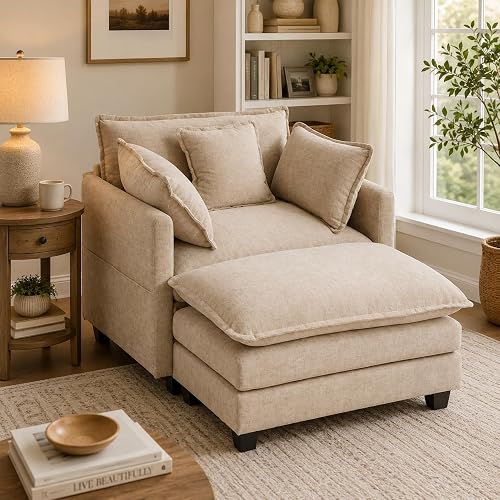

Chair and a half vs loveseat: which seats more people?
A loveseat is the better choice for 2 regular sitters, while a chair and a half is a roomy seat for one. Extra chair width doesn't guarantee enough space for 2 adults to sit comfortably.
Think about elbows as well as hips. Two people need room to rest their arms, change position and get up without making the other person move each time.
A parent and child may enjoy sharing a broad chair for a story, but that occasional use differs from seating 2 adults every evening. Don't make your main seating plan depend on squeezing together.
A chair and a half makes sense beside an existing sofa when the room already has enough places for everyone. It adds a personal spot without committing another section of wall to shared seating.
Choose a loveseat when this will be the room's main seat for a couple, or when guests often need somewhere to sit. For a closer look at the chair category, read what a chair and a half is.
Which one takes up less room?
A chair often needs less width, but a chair with an ottoman can need more depth than a loveseat. Compare the full arrangement rather than the furniture names.
The ONBRILL loveseat measures 64.5 inches wide and 31.8 inches deep, so you can mark its outer footprint clearly. Its usable sitting width will be smaller than its overall width because the arms take up space.
The LUXSeatful set has dimensions of 56.7 inches deep by 40.2 inches wide, while its description also names a 41-inch-wide seat. Confirm the chair's overall size, usable seat width and separate ottoman dimensions before ordering.
That distinction matters in a narrow room. A footrest directly in front of a chair may block the route past it, even when the chair itself fits neatly into a corner.
Use painter's tape to mark the outer edges, then place a box where the ottoman would stand. Open nearby doors and drawers, walk through the room and check whether someone can pass while another person sits.
A taped outline shows floor use, but not how bulky the furniture will look. Compare standard accent chair dimensions with nearby pieces, and use our guide to accent chairs for small spaces if the layout is tight.
Which style fits the way you like to sit?
A chair and a half favors spreading out alone, while a loveseat favors sitting beside someone. Seat depth, back support and arm position matter more than the style name when you want a comfortable fit.
For upright reading and conversation
Choose a seat that lets you reach the back cushion while keeping your feet supported. A deep seat can leave a shorter sitter choosing between back contact and feet on the floor.
An added back pillow can reduce usable depth, but it also takes away some of the space you bought. Compare measurements with a chair you already find comfortable instead of assuming deeper always means better.
For curling up or putting your feet up
Choose extra seat room for curled legs, or a separate ottoman if you prefer stretching forward. These are different sitting habits, and a wide seat doesn't replace a footrest for everyone.
A loveseat can give a solo sitter room to turn sideways, but that uses the space another person would occupy. If someone regularly joins you, plan around both people sitting rather than one person lounging across the seat.
Our guide to choosing an oversized reading chair explains how seat proportions affect a reading setup. Consider where your arms rest while holding a book, too, since a seat can feel roomy yet leave your shoulders working.
Who should buy each style, and who should skip it?
Buy a chair and a half for a dedicated personal seat or a loveseat to increase regular seating. Skip either option if its main strength doesn't match the job you need it to do.
Choose a chair and a half for a personal corner
This style suits someone who reads alone, likes changing sitting positions or wants a seat that feels separate from the main sofa. It also works when the household already has enough shared seating.
Skip it if 2 adults will need to use it together most days. A broad chair and an occasional seat on an ottoman don't serve the same purpose as 2 places with a backrest.
Also skip a chair-and-ottoman arrangement if the footrest will spend every evening blocking a doorway. Moving it once in a while is useful flexibility; moving it every time someone passes is a layout problem.
Choose a loveseat for everyday company
A loveseat suits couples, shared TV rooms and rooms where another sofa would be too wide. It keeps 2 sitters together and can leave other parts of the room free for a desk or storage.
Skip it if your main goal is a solo seat with a separate footrest and room to curl up. A loveseat may still work, but you'll be buying around a shared-seating function you rarely use.
If you need seats that can face different directions, consider separate chairs instead. A loveseat fixes both sitting places in one orientation, so it gives you fewer ways to rearrange a conversation area.
Which product fits each choice?
Pick the Chenille Chair and Ottoman Set for a personal reading area, or the Chenille Loveseat Sofa, 64.5-Inch for shared sitting. Both use chenille upholstery, so their layout and seating roles are the main differences.
Chair and a half vs loveseat: the solo-lounging option
The LUXSeatful chair combines a solid wood frame, tapered legs, 32D foam and pocket spring support. It includes pillows, and the coffee-colored upholstery gives you a different decorating starting point from the green loveseat.
Choose this set if you want to switch between feet-down reading and feet-up relaxing without changing seats. The separate ottoman can also serve as extra seating, though it doesn't provide a backrest.
Its main buying hurdle is the unclear relationship between the measurements. Resolve that before choosing this set for a close-fitting alcove or any spot with little spare floor space.
Loveseat: the shared-seating option
The ONBRILL loveseat has a steel and wood frame, high-density foam and independent springs. Its padded arms give each end sitter an armrest, while the attached back cushions stay with the frame.
The seat cushion cover is removable, but removability doesn't mean it's machine washable. Follow its care instructions before taking it off for cleaning.
Choose this model when you have room across a wall but want to limit how far seating projects into the room. Plan for assembly and confirm the usable seat width if 2 adults will share it regularly.
How should you set up the chair or loveseat?
Set up either piece around clear walking space and easy reach, then add nearby furniture. A reading seat works better when you don't need to stand up every time you put down a drink or turn on a lamp.
Measure the delivery route before arranging the final spot. Door openings, hallway turns, stairs and elevator entrances can cause problems even when the furniture fits the room.
Check package dimensions and assembly requirements rather than relying only on the finished furniture size. Clear a work area, protect the floor and keep the instructions until all parts are secure.
For a chair and ottoman, leave a practical place to move the footrest when you want to sit upright. It shouldn't have to occupy the room's only walkway when it's out of use.
For a loveseat, think about access from both ends. If a side table serves only one person, the other sitter may need a second reachable surface rather than reaching across their companion.
Place a reading light where your head and shoulders won't block it. Before settling the layout, sit in the planned position and check sightlines to the TV, window and other seats.
For a wider room-planning framework, see how to choose an accent chair for a living room.
How do you care for chenille seating day to day?
Use the furniture's care instructions to choose cleaning methods, and remove loose dirt before it becomes worked into the fabric. Chenille describes the upholstery texture, not permission to use any particular cleaner.
Vacuum gently with a suitable upholstery attachment, paying attention to seams and spaces around cushions. Avoid pulling at loose threads or scrubbing hard enough to catch the textured surface.
Blot spills promptly with a clean cloth instead of rubbing them across the seat. Check the care label before adding water or cleaning products, and try any approved cleaner in a hidden area first.
Don't assume a removable cover can go into a washer or dryer. Heat and an unsuitable cleaning method can affect fit or appearance, so keep the instructions available.
Use the ottoman as intended and keep furniture stable on the floor. Avoid treating an armrest as an extra sitting place or standing on the upholstery to reach a shelf.
If either piece can be assembled or adjusted, follow its instructions for checking fasteners. Keep this care routine separate from decorating choices, which our guide to whether accent chairs have to match can help you plan.
What mistakes make this choice harder?
The biggest mistake is buying for an imagined routine instead of your normal one. A generous solo seat can be the wrong choice if it leaves someone else without a regular place to sit.
- Comparing seat width with overall width. Use overall measurements for room fit and usable seat measurements for body fit.
- Treating an ottoman as free floor space. Include both its working position and its parking spot in your plan.
- Assuming deeper means more comfortable. Check whether you can sit against the back with your feet supported.
- Using weight capacity to count seats. A support limit doesn't tell you how much room 2 people have between the arms.
- Choosing fabric color before layout. Settle the seating job and footprint first, then consider how the piece fits your room's colors.
If the choice still feels close, write down the one task the new furniture must improve. “Give us 2 seats for evening TV” points toward a loveseat; “give me a reading spot with my feet up” points toward a chair and ottoman.
Chair and a half vs loveseat: which should you choose?
Choose the chair and a half when one person's lounging space is the priority. Choose the loveseat when 2 people regularly need to sit together, and verify the room layout before ordering either one.
For the LUXSeatful set, settle the chair and ottoman measurements first. For the ONBRILL loveseat, confirm the space between the arms and leave room for delivery and assembly.
If both arrangements fit, let your usual sitting habit decide rather than the occasional guest or a staged room photo. The best choice is the piece that serves your household without needing constant rearranging.
Use the oversized and reading category to compare more options, or read the complete accent chair buying guide if you're still deciding what kind of personal seat you need.
Product links: Chenille Chair and Ottoman Set: See it on Amazon and Chenille Loveseat Sofa, 64.5-Inch: See it on Amazon.
Frequently asked questions
Is a chair and a half bigger than a loveseat?
A chair and a half is usually narrower than a loveseat, but it can need more front-to-back space when paired with an ottoman. Compare overall width, depth and the footrest's position; seat width describes where you sit, while overall width includes the arms and determines whether the furniture fits.
Can 2 people sit in a chair and a half?
A chair and a half is best treated as one roomy seat, even if 2 people can squeeze into some designs. Usable width, body size and arm shape affect the fit; choose a loveseat when 2 adults need regular places to sit, and confirm the space between its arms.
Does a chair and a half need an ottoman?
No, a chair and a half doesn't need an ottoman, but a separate footrest helps if you like to stretch your legs. The chair set here includes one; plan where it will sit during use and where you'll move it when you need a clear path through the room.
Which is better for a small living room, a chair and a half or a loveseat?
Choose a chair and a half for one person's dedicated corner, or a loveseat when shared seating matters more. A narrow chair with an ottoman can still occupy a deep area; tape out the full arrangement and check doors, drawers and walkways before choosing either style for a small room.


