Swivel Chair vs Rocking Chair: Which Is Better? (October 2026)
For a swivel chair vs rocking chair choice, pick a swivel for turning toward people or activities, or a rocker for back-and-forth motion. Match the seat shape and movement clearance to your room and sitting habits.
On this page (10 sections)
- Swivel Chair vs Rocking Chair
- Swivel chair vs rocking chair: which movement suits you?
- Which chair gives you more room to sit?
- Which chair is easier to place in a small room?
- Which chair fits reading, conversation and everyday tasks?
- What should you check before buying either chair?
- How should you set up and care for a moving chair?
- What mistakes should you avoid when choosing?
- Related chairs for different seating needs
- Which should you choose: a swivel chair or a rocking chair?
Swivel Chair vs Rocking Chair
Choose a swivel chair for changing direction and a rocking chair for back-and-forth movement. The swivel chair vs rocking chair decision starts with how you use the room, then comes down to seat fit and movement clearance.
A swivel suits a living room where guests, a television and a window face different directions. A rocker suits a settled reading spot where gentle motion is part of the appeal.
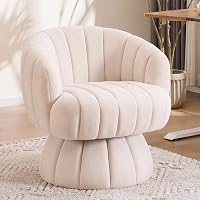
The CANMOV swivel and Nahenduo rocker below also differ in shape. One has armrests and a defined seat; the other has open sides for changing leg positions.


Swivel chair vs rocking chair: which movement suits you?
A swivel turns around its base, while a rocker travels along curved feet. Choose turning for access to different views and rocking for motion while facing one way.
Neither movement guarantees a comfortable seat. Back support, usable cushion space and the way your feet meet the floor matter just as much during a long sit.
Swivel chair vs rocking chair for a shared living room
A swivel chair is the stronger choice when one seat serves several activities. You can turn toward a visitor, then face the television without dragging the chair across the floor.
This works especially well beside a sofa, where a fixed chair might face away from part of the conversation. Leave enough room for the chair's back and arms to pass nearby furniture.
The CANMOV measures 29 x 28 x 29 in, in width, depth and height, and has a full-circle swivel base. Its curved back and armrests make it a useful candidate for a defined seat within a larger conversation area.
Our guide to choosing a swivel accent chair covers base, seat and fabric choices. Compare our best swivel chairs for living rooms if you need a different seat shape.
When does a rocking chair make more sense?
A rocker makes more sense when you want movement without changing your view. Place it toward the window, reading light or screen you expect to use most.
The Nahenduo has curved wood rocker feet and an armless cushion. Its open sides suit people who dislike having their legs boxed in by chair arms.
Skip a rocker if back-and-forth motion distracts you or makes you feel uneasy. If you mainly want to turn toward people behind or beside you, rocking won't solve that need.
Which chair gives you more room to sit?
The armless rocker offers more freedom at the sides, while the swivel offers a contained seat with elbow support. Compare usable cushion space rather than assuming an oversized name means a better fit.
Nahenduo describes its cushion as 41.3 in wide but gives an overall width of 27.8 in. Confirm the cushion width and assembled dimensions before ordering, because those measurements conflict.
The CANMOV seat is 21 in wide and 22 in deep. Measure a comfortable chair at home between its arms and from the front cushion edge to the back to see how those dimensions compare.
Is an armless rocker better for sitting cross-legged?
An armless rocker is the better starting point if you often sit cross-legged or tuck one leg beside you. Open sides remove the hard boundary that armrests create.
Still, your legs need enough cushion beneath them. Don't assume that space beyond a cushion's edge provides support just because there is no arm in the way.
Skip this shape if you depend on chair arms when sitting down or standing up. A broad, soft seat can also be awkward if you must move a long way forward before your feet reach the floor.
For extra sitting room without committing to rocking, compare a chair and a half. That style may suit someone who values a wide seat more than movement.
Do armrests make a swivel chair more comfortable?
Armrests help when you want a place for your elbows while reading or talking. They become a drawback when they squeeze your hips or interrupt your preferred leg position.
Look for a relaxed shoulder position rather than choosing arms by appearance. Arms that feel too high can push your shoulders upward; arms too far apart may leave you leaning sideways.
For more sizing context, see standard accent chair dimensions. Use those measurements alongside a chair you already find comfortable.
Does thicker padding mean a better seat?
Thicker padding doesn't automatically mean better support. Cushion depth, firmness and your sitting position determine whether you stay supported or sink farther than you want.
The Nahenduo has 6.7 in thick padding with corduroy upholstery. It suits someone seeking a cushioned lounging shape, but the padding measurement alone cannot tell you how easily you'll rise from it.
The CANMOV combines high-density foam with pocket springs beneath teddy fleece upholstery. Choose it for its seat shape and turning function rather than expecting its materials to suit every body.
Which chair is easier to place in a small room?
A compact swivel often suits a small seating area, but only if its turning path stays clear. A rocker needs usable floor space beyond its resting footprint.
Don't push a swivel into a corner and assume it will retain its full movement. Its back can meet a wall as it turns, even when the base remains in the same place.
For a rocker, leave room at both ends of the motion. A chair that clears a wall while empty may move differently once someone sits and rocks.
Mark the resting footprint with painter's tape, then allow for movement around it. Keep that area outside the route between doors, the sofa and the rest of the room.
Also check access to drawers, curtains and nearby storage. Furniture that fits neatly at rest can still make daily tasks awkward.
Our best accent chairs for small spaces guide covers compact alternatives. Use the accent chair dimensions guide to separate seat measurements from overall size.
Which chair fits reading, conversation and everyday tasks?
Choose a swivel for mixed activities and a rocker for a dedicated relaxation spot. The right chair should reduce awkward reaching and turning during the activity you do most.
For conversation, place a swivel within easy talking distance of the sofa. Turning helps you face someone, but it can't make a chair across the room feel part of the group.
For reading, put the lamp where it lights the page without forcing you to twist. A side table should be reachable from your normal seated position, rather than only at the far end of a swivel or rocking motion.
Keep drinks on a stable table outside the chair's movement path. Don't place a cup where an armrest or your knee can knock it as the chair moves.
If you use a footstool, check how it affects movement and your route out of the chair. A stool can obstruct a rocker's travel or leave too little space to turn your feet with a swivel.
For a reading nook, decide whether motion helps you settle or keeps drawing your attention. Compare oversized reading chair sizes and shapes if stretching out matters more than turning.
Neither of these chairs should be chosen as a desk chair solely because it moves. Desk work also needs a suitable seat height, supported posture and a comfortable relationship to the work surface.
What should you check before buying either chair?
Check seat fit, delivery access, movement clearance and weight limits before choosing upholstery or color. These details determine whether the chair works in your home.
Measure the route into the room
Measure door openings, hallways and tight turns, including anything that narrows the route. Confirm the dimensions of the delivered parts and whether assembly happens inside the room.
Don't assume a chair will pass through a doorway because its seat is narrow enough. The back, arms and frame can be wider or harder to angle through a turn.
Check foot support and ease of standing
Choose a seat that lets you sit without pressure behind your knees. If your feet hang or you slide forward to reach the floor, the chair may be too deep or too high for you.
Seat height isn't established here for either model. If getting up easily is a priority, confirm that measurement and compare it with a familiar chair before buying.
Someone who needs a steady support when rising should also check whether movement can be secured. Don't assume either chair includes a locking function.
Resolve the limits that affect your choice
Confirm CANMOV's weight limit because its stated figures differ between 300 and 350 lb. Nahenduo gives a 300 lb capacity, which is a limit rather than a promise about seat comfort.
Weight capacity doesn't tell you whether a cushion is wide enough or a chair is easy to enter. Treat capacity, usable seat space and posture as separate checks.
For a broader room plan, our complete accent chair buying guide connects chair shape, placement and everyday use.
How should you set up and care for a moving chair?
Set either chair on a level, stable surface, assemble it fully and check its motion before placing tables nearby. Follow the instructions for the exact chair rather than borrowing advice for a different base.
CANMOV includes assembly tools. Nahenduo uses a wood frame and a one-piece cushion, so check that the cushion is positioned and secured as directed.
During assembly, start fasteners as instructed before tightening them fully. Keep packaging until you've checked the chair for missing parts and confirmed that it works in its intended spot.
Keep the floor and moving parts clear
Keep rug edges, loose cords and small objects away from the movement path. A swivel base should sit evenly, and rocker feet need consistent contact with the surface beneath them.
Nahenduo includes non-slip pads beneath its rocker feet. Check their position during setup and inspect them for wear during normal cleaning.
Keep fingers, children's hands and pet tails away from moving parts. Stop movement before reaching underneath, and move the chair aside to retrieve anything caught near its base.
Clean upholstery without soaking the cushion
Remove loose dust and crumbs regularly using a method permitted by the care instructions. Work gently along corduroy channels and across textured fleece so debris doesn't collect in the fabric.
Blot spills promptly instead of rubbing them deeper. Use only an approved cleaner, try it on a hidden area first and allow the fabric to dry before sitting.
Don't assume either cushion cover can go in a washing machine. Nahenduo calls for spot cleaning, and removable-looking upholstery still needs its own care directions.
If a swivel develops a squeak or wobble, stop using it until you've checked the cause. Our guide to fixing a squeaky or wobbly swivel chair explains what to inspect before choosing a repair.
What mistakes should you avoid when choosing?
The biggest mistake is buying the movement you like without checking the seat you need. A useful turning base or pleasant rocking motion won't compensate for a cramped or awkward sitting position.
Another mistake is confusing open sides with arm support. The armless rocker allows more leg positions, but it gives your elbows no chair arms to rest on while you hold a book.
Don't buy a swivel expecting it to rock, or a rocker expecting it to face several parts of the room. These two models provide different movements, and neither substitutes for the other.
Avoid planning around an unconfirmed measurement. Resolve the Nahenduo width conflict before clearing a corner, and resolve the CANMOV capacity conflict before relying on its higher figure.
Finally, don't judge floor fit from a photograph. Tape out the space and walk the surrounding route with doors open and nearby furniture in normal use.
Related chairs for different seating needs
Compare these guides if your room calls for a different chair size or shape. They offer useful next steps when these 2 models don't match your layout.
- Best swivel chairs for living rooms
- How to choose an oversized reading chair
- Best accent chairs for small spaces
Which should you choose: a swivel chair or a rocking chair?
Choose the CANMOV swivel for a shared living room where you want armrests and easy changes of direction. Choose the Nahenduo rocker for curled-up reading where open sides and back-and-forth motion matter more than turning.
Skip the CANMOV if you need a broad, unrestricted seat. Skip the Nahenduo if you depend on armrests, need a compact footprint or can't keep its rocking path clear.
For your final swivel chair vs rocking chair decision, check the fit in this order: sitting posture, room to move, then fabric and appearance. Confirm the unresolved measurements or capacity before committing to either model.
If turning is your priority, continue with our swivel chair guide. If seat fit is the deciding factor, compare your measurements with standard accent chair dimensions.
Frequently asked questions
Is a swivel chair or rocking chair better for reading?
A swivel chair is better if you want to turn toward a lamp or another person, while a rocker suits readers who enjoy back-and-forth motion. For either style, choose a seat that lets you support your feet and hold a book without hunching your shoulders.
Does a rocking chair need more space than a swivel chair?
A rocking chair needs clear space in front and behind its curved feet, while a swivel chair needs clearance around its turning path. Neither style always takes more room; compare the full movement area, then check that it stays clear of walkways, doors and nearby furniture.
Can you put a swivel chair on a rug?
A swivel chair can go on a rug if its instructions allow it and the base stays stable and turns freely. Keep the rug flat beneath the whole base, with edges clear of moving parts; reposition the chair if the rug bunches or the base rocks.
Which chair is easier to fit in a small living room?
A compact swivel is often easier to place than an oversized rocker, provided its turning path stays clear. Compare actual dimensions rather than chair labels; a narrow corner can still prevent a swivel from turning, while a rocker may block a walkway when it moves backward.